Author

Rhinos, Root Bridges & River Islands: Our 16-Day Assam–Meghalaya Road Trip
March 11, 2026
Assam–Meghalaya Road Trip Diary
16 days, one car, countless stories — December 16, 2025 to January 1, 2026
| Date | Route / Base | Main highlights |
|---|---|---|
| Dec 16 | Mumbai → Guwahati → Kaziranga | Flight to Guwahati, lunch at Refresko, drive to Agratoli Jungalow |
| Dec 17 | Kaziranga | East Range safari, Basudev Than, Bagori safari, Orchid Park cultural show |
| Dec 18 | Kaziranga → Sivasagar | Talatal Ghar, Rang Ghar, Borpukhuri, Siva Dol, Devi Dol, Kareng Ghar, Charaideo |
| Dec 19 | Sivasagar → Majuli | Ferry to Majuli, Kamalabari Satra stay, Auniati Satra, Assamese family lunch, Chamaguri Satra |
| Dec 20 | Majuli | Silk village, Muga/Eri weaving, mustard fields, shopping, local family lunch |
| Dec 21 | Majuli → Nameri | Drive to Nameri, lunch at River Valley, stay at Wild Mahseer, tea garden visit |
| Dec 22 | Nameri → Shillong | Wild Mahseer bungalows, vintage cars, 11 Mile Picnic Spot, long drive to Shillong |
| Dec 23 | Shillong | Umiam Lake, Mini Pahalgam, Mawphlang Sacred Forest, Elephant Falls, ML 05 Café |
| Dec 24 | Shillong | Laitlum Canyons |
| Dec 25 | Shillong / Jaintia Hills | Laitlum again, Nartiang Durga Temple, Nartiang Monoliths |
| Dec 26 | Shillong → Dawki / Mawlynnong / Cherrapunji | Dawki River, Riwai Living Root Bridge, Mawlynnong, night at Café Cherrapunji |
| Dec 27 | Cherrapunji → Shillong | Double Decker Root Bridge hike, Mawsmai Caves, return via Umiam |
| Dec 28 | Shillong → Guwahati | Drive to Guwahati, Navagraha Temple, Srimanta Sankardev Kalakshetra |
| Dec 29 | Guwahati | Kamakhya Temple, Sualkuchi |
| Dec 30 | Guwahati / Pobitora | Pobitora safari, dolphin cruise, lunch at Mayong Villa, Fancy Market |
| Dec 31 | Guwahati | Brahmaputra cruise, Peacock Island, Umananda Temple, ropeway, tea tasting |
| Jan 1 | Guwahati → Mumbai | Return flight |
Some trips are about ticking off destinations. This one was not.
This was a road trip through Assam and Meghalaya — the kind where the landscape keeps changing, the food keeps surprising you, history appears when you least expect it, and every day gives you a completely different memory. One day we were watching rhinos emerge from elephant grass in Kaziranga; another day we were walking through Ahom history in Sivasagar; then suddenly we were on Majuli, drifting into monastery life and silk villages, and a few days later we were deep in Meghalaya, staring into cloud-filled canyons and crossing living root bridges.
What made it special was not just the places. It was the feeling of moving through them slowly, by road, seeing the transitions — plains to river island, tea country to hills, forest to cloud country.
Here is our journey, as we lived it.
Day 1 – Mumbai to Guwahati, then onward to Kaziranga
 Approx. drive: Guwahati to Kaziranga East Range / Agoratoli side ~220 km, around 4.5 to 5.5 hours
We landed in Guwahati around 10 in the morning, and almost immediately the trip felt as if it had begun in earnest. There was no “rest day” buffer, no city stop first. We picked up the road and started driving east toward Kaziranga.
That first drive in Assam was a gentle introduction to the Northeast — open stretches, greenery everywhere, roadside life moving at its own rhythm. We stopped for lunch at Refresko, and then continued toward the quieter Agoratoli side of Kaziranga.
We stayed at Agoratoli Jungalow, in Diffloo Pathar near Kaziranga’s Eastern Range, a tea-bungalow-style stay set among fields and water bodies, very close to the safari zone. The property itself is small and intimate — just three bedrooms — which made it feel less like a hotel and more like being hosted in a beautiful country home. The food was outstanding: warm, fresh, deeply satisfying, the sort of meal that makes you instantly relax after a long drive. One of the lovely things about the place was how rooted it felt in the land around it — they even grow vegetables on the property. Officially, the Jungalow describes itself as an eco-friendly homestay near Kaziranga’s Eastern Range, surrounded by fields and wetlands, and that is exactly how it felt.
And then came our first surprise of winter Assam: the light disappears early. By about 5 PM, the sun had already slipped away. The evening became still, cool, and slightly magical. Tomorrow morning, the jungle awaited.
Day 2 – Kaziranga: grasslands, rhinos, and a full Assamese evening

We were picked up early by our safari guide in an open Maruti Gypsy — the classic safari version, with two rows of three seats in the back, the kind of vehicle that immediately makes you feel the adventure has properly started.
Our morning safari was in Kaziranga’s Eastern Range, Agoratoli, one of the park’s recognized ranges. Kaziranga is a UNESCO World Heritage Site and is globally important for protecting the largest population of the Indian one-horned rhinoceros.
 The East Range felt wide, wild and slightly mysterious. The grass here is not decorative grass — it is serious elephant grass, towering and dense. At times it felt high enough to swallow an animal whole. That is exactly why spotting elephants was so difficult: they were there, but often half-hidden, moving like shadows through that giant grassland. Rhinos, on the other hand, seemed to reveal themselves with more authority.
 In the afternoon we drove to Basudev Than, in the Dhansirimukh area near Bokakhat. It is an important local Vaishnavite religious site, and one of its memorable attractions is a giant banyan tree that gives the place a deep, old, rooted feel. Nearby village shrines like this often do not have the fame of major temples, but they carry a very lived spirituality.
 Later came the second safari, this time in Bagori / Western Range, and this one was unforgettable. We saw rhinos at close range, the kind of sighting where everyone in the vehicle instinctively becomes quiet. There were also wild buffaloes, elephants, barasingha, and birds everywhere. Kaziranga is not a zoo-like experience where animals line up for you. It is all about tension, patience, sudden revelation — a horn, a back, a movement in reeds, and then suddenly the whole animal is there.
By evening, the day shifted from wildlife to culture at the Kaziranga National Orchid and Biodiversity Park, popularly called Orchid Park. This was far more than a quick tourist stop. The park is designed as a compact showcase of Assam’s biodiversity and culture, with orchid collections, bamboo varieties, tribal displays, and even a vegetable garden; visitors also regularly mention its evening cultural programs.
But facts alone do not capture the mood of that evening.
After a day of safaris, the cultural show felt like Assam introducing itself properly. There was music, traditional costume, rhythm, movement, and a kind of unforced joy in the performances. It did not feel like a sterile staged event. It felt like a living cultural window. After hours of searching for animals in silence, this was the opposite experience — color, drums, folk energy, and the sense that wildlife may bring you to Kaziranga, but culture makes you stay longer in your memory.
Day 3 – Kaziranga to Sivasagar: entering the world of the Ahoms
 Approx. drive: 170 km, 4 to 5 hours
This was the day the trip shifted gears.
Until now, Assam had been forest, river, and wildlife. In Sivasagar, it became history — and not just local history, but one of the great political stories of India that many people outside the Northeast hardly know enough about.
The Ahoms were a Tai-origin ruling group who entered Assam in 1228 under Sukaphaa, traditionally traced to the region of Mong Mao / Yunnan–Upper Myanmar connections, and they went on to build a kingdom that ruled much of Assam for roughly six centuries. Britannica notes that the Ahoms ruled much of Assam from the 13th century until British rule in the 19th century, and that their power peaked under Rudra Singha (1696–1714).
What makes the Ahom story especially thrilling is that they were not simply local kings who built monuments. They were state-builders, military organizers, chroniclers, and fierce defenders of the Brahmaputra valley. The most celebrated episode is the Battle of Saraighat in 1671, when the Ahoms under Lachit Borphukan decisively checked Mughal expansion on the Brahmaputra. That victory became one of the defining military moments in Assam’s history.
Walking through Sivasagar after reading that history changes the experience. These are not isolated monuments. They are remains of a civilization that held its ground.
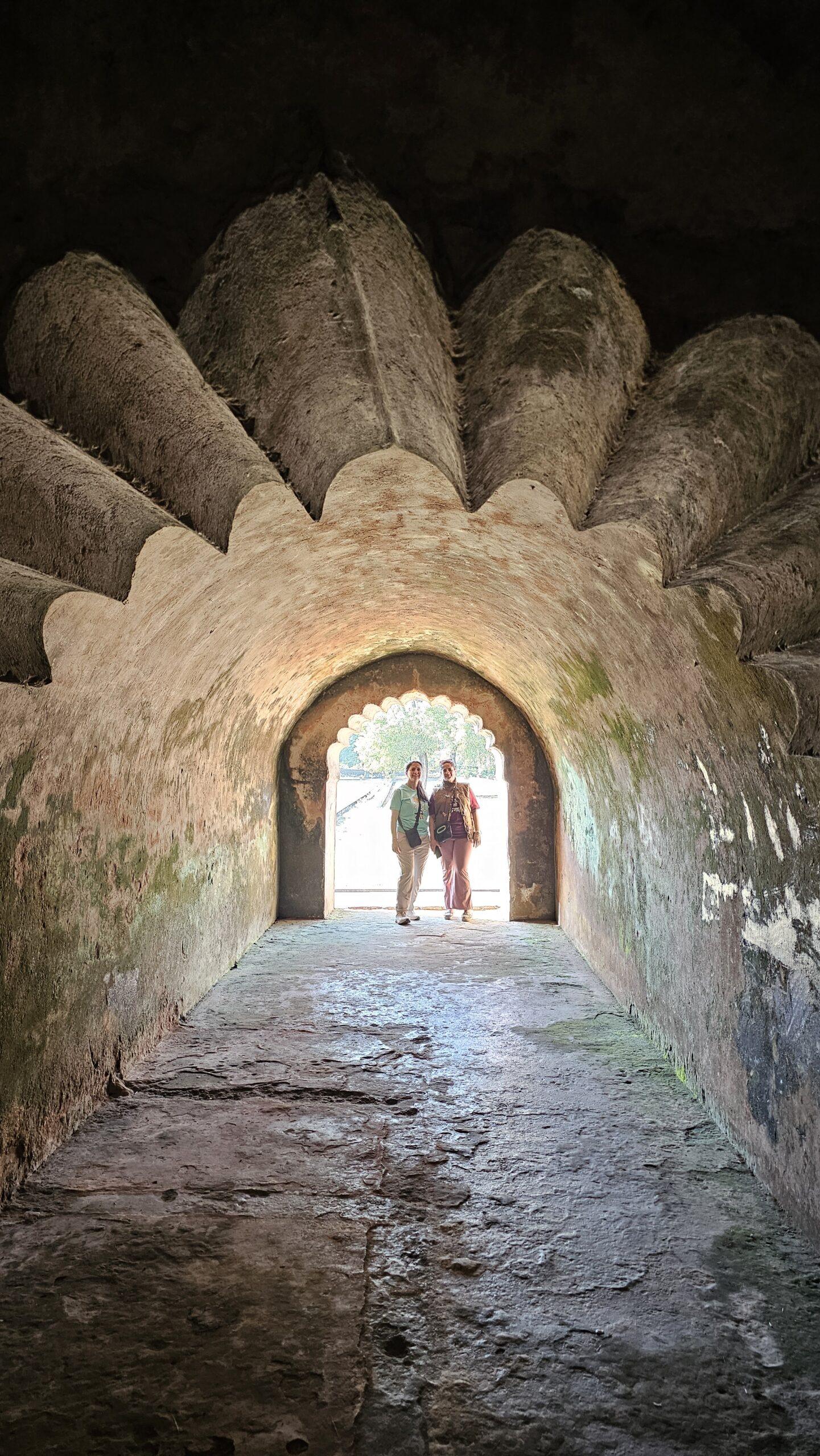
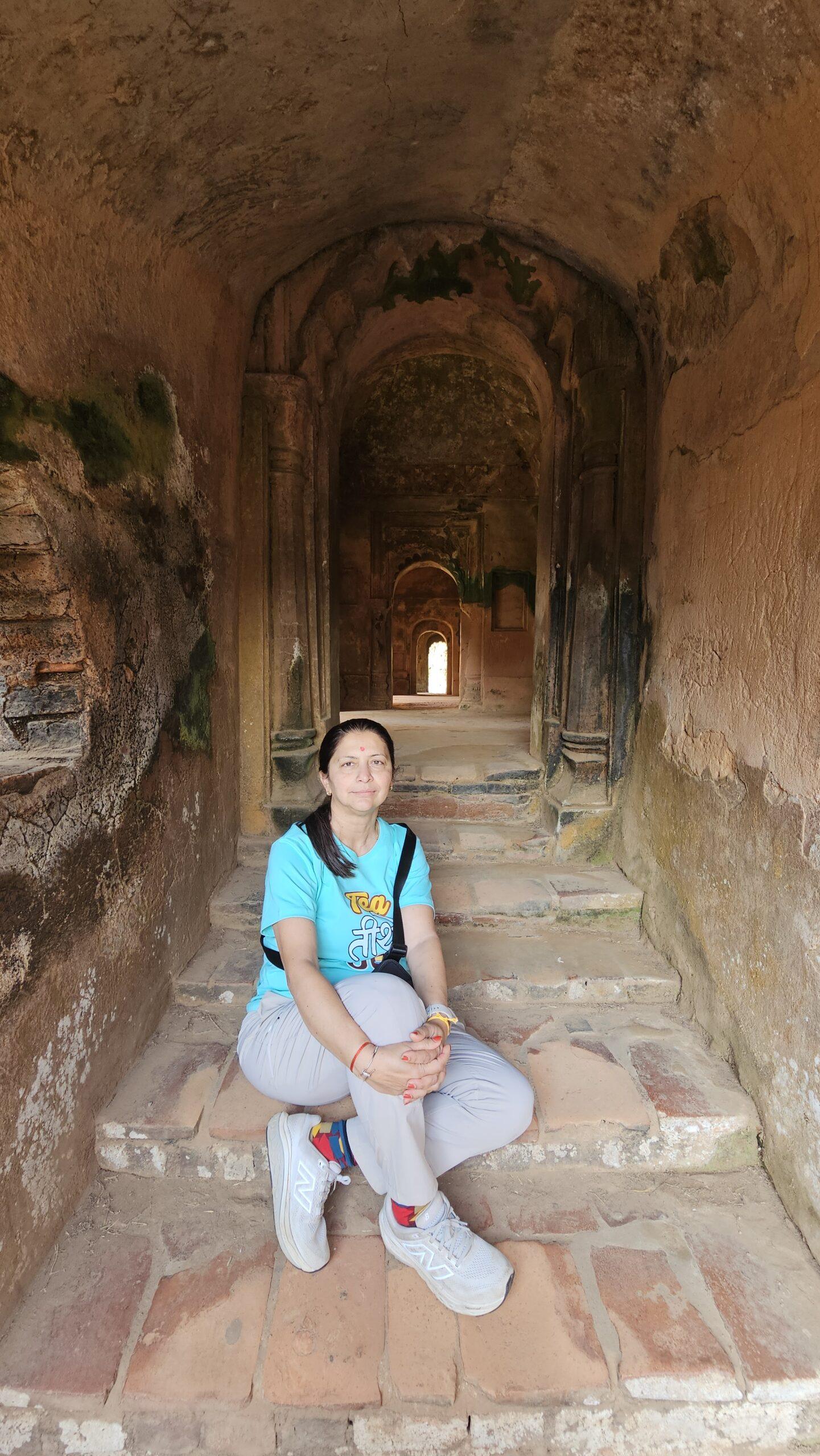
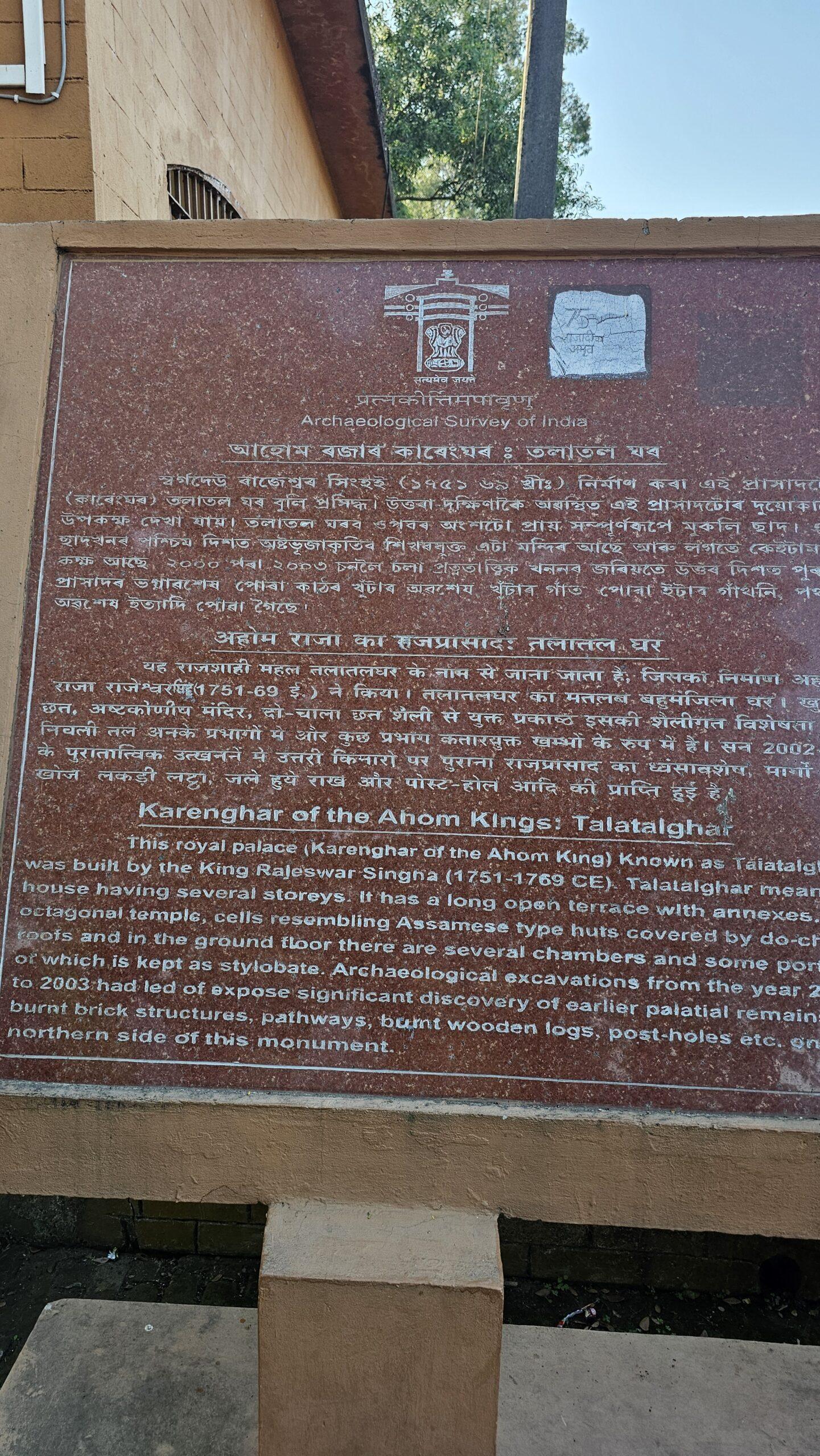 We visited Talatal Ghar, the vast multi-level Ahom palace complex associated with royal and military use; Rang Ghar, often described as one of Asia’s oldest amphitheatre-like pavilions; Kareng Ghar, another royal structure; and the Charaideo Maidams, the burial mounds of Ahom royalty, now internationally recognized as major heritage remains of the dynasty.
Then came the temple complex by the great tank of Sivasagar — and this part had a different emotional quality.
The Sivasagar Tank / Borpukhuri and the temple trio of Siva Dol, Vishnu Dol, and Devi Dol sit in the heart of the town. Assam Tourism notes that Queen Ambika, wife of Swargadeo Siva Singha, ordered the construction of these temples, with Siva Dol being the tallest and most prominent, flanked by Vishnu Dol and Devi Dol.
 We visited Siva Dol and Devi Dol, and there was something moving about seeing them after spending the day amid Ahom palaces and royal remains. Historically, the Ahoms did not begin as Hindus; over time, however, the Ahom court increasingly adopted Assamese language, Hindu titles, and patronage of Hindu institutions, with formal royal initiation into Hinduism recorded from 1648 onward.
As a traveler with my own civilizational lens, I found this transition fascinating. To me, it reflected the magnetic strength of Hindu thought and ritual culture in the region. Historically, the safest way to say it is this: the Ahoms gradually integrated into the religious and cultural world of Assam, and by the later phase of their kingdom, Hindu institutions and temples had become central to royal patronage.
Standing there at Siva Dol, with the temple rising over the water, history stopped feeling academic. It felt continuous.
Day 4 – Sivasagar to Majuli: the ferry to another world
Approx. drive to ferry + ferry crossing via Nimati Ghat
Road trips are wonderful, but ferries change the mood of a journey completely.
To reach Majuli, we drove to the ferry point and crossed the Brahmaputra. That crossing itself felt symbolic — as if mainland Assam was slowly receding, and a different rhythm of life was coming toward us.
Majuli is celebrated as one of the world’s largest inhabited river islands, and Assam Tourism highlights it for its Satras, mask-making, bhaona theatre, and dance traditions.
We stayed at Kamalabari Satra. In our case, the stay was in a government-style establishment with beautiful wooden cottages; we were told these had been brought from Finland, and they gave the whole stay an unexpectedly elegant, almost Nordic-meets-Assam feel. Whether you come for comfort, spirituality, or culture, staying at Kamalabari gives you a very different Majuli experience from a standard hotel.
Now, what is Kamalabari Satra? In the larger Majuli tradition, Kamalabari is one of the important Vaishnavite satras — institutions that are not just monasteries, but centers of religion, arts, literature, music, scholarship, and performance. The Assam tourism corporation describes Kamalabari Satra as a centre of art, culture, literature and classical studies, and notes that its branch, Uttar Kamalabari Satra, has carried Sattriya art across India and abroad.
We also visited Auniati Satra, one of Majuli’s best-known royal satras. Assam Tourism’s Majuli material notes that it was established in 1653 by Ahom king Jayadhwaj Singha and became one of the island’s most prominent monasteries.
Lunch that day was at a local Assamese family home, and that remains one of the warmest memories of the trip. Good travel is not just monuments and viewpoints. Sometimes it is sitting on someone’s veranda, eating what they eat, and feeling for an hour that you have not come to “see” a place, but to briefly belong to it.
In the evening we went to Chamaguri Satra, famous for its traditional mask-making, an art linked to Bhaona performances. There we had the privilege of meeting Padma Shri Hem Chandra Goswami, whose life’s work has helped preserve this remarkable tradition.
Day 5 – Majuli villages, silk, mustard fields and slow beauty
If Day 4 was about Majuli’s spiritual and cultural institutions, Day 5 was about the island’s everyday genius.
We drove about an hour through villages and countryside. The roads were simple, the landscape open, and winter had painted the fields in yellow. The mustard flowers were in bloom, and at times the road seemed to run through liquid gold.
We visited a village where Muga and Eri silkworms are reared and where the silk eventually finds its way onto handlooms. Assam is world-famous for these silks, especially Muga, the naturally golden silk strongly associated with Assamese identity. What moved me was not only the final product, but the chain behind it — trees, worms, thread, loom, patience, craft.
And yes, we shopped properly.
We ended up buying a lot of silk — sarees, dupattas, and silk cloth — the kind of purchases that feel less like shopping and more like carrying a part of the place home with you.
Lunch again was with a Majuli family, and once more the island did what it does best: it slowed us down. Majuli does not shout for attention. It quietly wins you over.
Day 6 – Majuli to Nameri
A long drive day
After Majuli’s river-island softness, this was a proper road day again. We drove toward Nameri, stopping on the way for lunch at River Valley Restaurant.
By evening we reached Wild Mahseer, and what a lovely change of mood this was. If Majuli had felt spiritual and rural, Wild Mahseer felt heritage-rich and atmospheric. The estate is known for its restored colonial-era tea bungalows, and staying there feels like stepping into another time, but without giving up comfort.
We had a tea-garden visit and dinner at the property, and the whole evening felt beautifully old-world.
Day 7 – Wild Mahseer, Jia Bharali, Arunachal border… and then the long push to Shillong
The morning was spent exploring the old British-era bungalows at Wild Mahseer and admiring their vintage cars. It was one of those unexpectedly photogenic pauses in the trip.
Later we drove to 11 Mile Picnic Spot, along the Jia Bharali River, the beautiful river that flows along the southern side of Nameri National Park. Nameri lies in the eastern Himalayan foothills, not far from Tezpur, and the Jia Bharali is one of the reasons the whole landscape feels so alive.
We hoped to go into Arunachal Pradesh, but entry did not happen, so the day suddenly changed shape. That is the thing with road trips — sometimes the route decides for you.
So we turned and drove toward Shillong.
It was a very long drive, but not an uninteresting one. One of the memorable transitions on this stretch is crossing the Brahmaputra region near Tezpur, associated with the Kolia Bhomora bridge, named after an Ahom general. The existing bridge, opened in 1987, has long been one of the important connectors across this mighty river in the area.
And then, as the hours pass, the character of the land begins to change. Assam’s broad plains gradually give way to the ascent toward Meghalaya. By the time you approach Shillong, you start feeling that hill-state shift — cooler air, rising road, and that sense of entering another geographical mood altogether. One of the visual signals of arrival is Umiam Lake, the huge reservoir on the Shillong-Guwahati highway that sits in Ri-Bhoi district and effectively welcomes travelers into Meghalaya.
By the time we reached Shillong, we were tired — the good kind of tired that only a full day on the road can produce.
Day 8 – Shillong: lakes, sacred groves and a café with attitude
Shillong immediately feels different from Assam. It is hillier, moodier, cooler, more compact. We stayed at Hotel Nicholas and headed out.
We stopped at Umiam Lake, also called Barapani, a large reservoir that has become one of Meghalaya’s defining scenic views and sits right on the approach to Shillong.
Then came Mawphlang Sacred Forest, one of those places where nature and belief are inseparable. Sacred groves like this have survived precisely because communities protected them through taboo, reverence, and inherited ecological discipline.
We also visited Elephant Falls, and later had dinner at ML 05 Café, an automobile-themed place with a real Bullet motorcycle inside — quirky, stylish, and very Shillong.
Day 9 & 10 – Laitlum and Nartiang: where the hills open up
Laitlum Canyons is one of those places that photographs can never fully explain. The name is often interpreted as something like “end of hills,” and that feeling is exactly right. You stand at the edge, and suddenly Meghalaya is no longer just hills. It becomes space, depth, silence, and cloud.
We returned again, because some places deserve more than a rushed stop.
On the historic-spiritual side, we also visited the Nartiang Durga Temple in West Jaintia Hills. It is widely regarded as a Shakti Peetha, and sources commonly describe it as around 500–600 years old. It is especially significant because local tradition worships the goddess here as Jainteshwari / Jayanti, and the temple reflects a fascinating fusion of Hindu and local Jaintia-Khasi practice.
Day 11 – Dawki, Riwai and Mawlynnong
This was postcard Meghalaya.
At Dawki, the Umngot River was as clear as everyone says it is. Boats seemed to hover in air.
At Riwai, we saw the Living Root Bridge, one of Meghalaya’s great examples of patient indigenous engineering — not built in the conventional sense, but grown over time by guiding the roots of rubber trees.
Then came Mawlynnong, celebrated for years as “Asia’s cleanest village.” Labels aside, what stayed with me was the obvious civic pride — tidy pathways, bamboo bins, flowers, care.
That night we stayed at Café Cherrapunji.
Day 12 – Hike to the Legendary Double Decker Root Bridge and Mawsmai caves
This was one of the toughest and most rewarding days of the trip.
The hike to the Double Decker Living Root Bridge is not a casual stroll. It is a real descent into the landscape, and of course, what goes down must come back up. But the reward is unforgettable: a bridge grown by human patience and natural intelligence, layered, alive, and completely unlike anything in most of the world.
Later we also did Mawsmai Caves, a very different experience — rock, darkness, narrow passages, texture.
By evening we were back toward Shillong, with another view of Umiam on the way.
Day 13 – Back to Guwahati
We drove from Shillong back to Guwahati.
In the city we visited Navagraha Temple, dedicated to the nine planetary deities, a place that naturally held extra interest for me.
We also went to Srimanta Sankardev Kalakshetra, one of Guwahati’s major cultural institutions, created to showcase Assam’s art, heritage and civilizational memory.
Day 14 – Kamakhya and Sualkuchi
A trip to Guwahati feels incomplete without Kamakhya.
Perched on Nilachal Hill, Kamakhya Temple is one of the most important Shakti Peethas in India and one of the most spiritually charged places in the region. For many travelers, it is not just a temple visit; it is an encounter.
Later we went to Sualkuchi, often called the silk town of Assam, where weaving is not a performance for tourists but a deep local tradition.
Day 15 – Pobitora, Mayong and the Brahmaputra again
We went for a safari in Pobitora Wildlife Sanctuary, famous for its remarkable density of one-horned rhinos.
After that came a dolphin cruise, lunch at Mayong Villa, and later some shopping at Fancy Market.
Mayong, of course, carries its own aura in Assamese folklore — often spoken of as the land of magic and mystique.
Day 16 – Cruise, Peacock Island, tea… and goodbye
On our final full day, we took a Brahmaputra cruise to Peacock Island, home to the Umananda Temple dedicated to Shiva.
We also did the ropeway, which gave us one more sweeping view of the river that had silently accompanied so much of this trip.
And then there was one final pleasure: tea tasting. In Assam, buying tea is not a souvenir activity. It feels like taking the essence of the place home. We bought some beautiful, exclusive teas — a fitting end to a journey through a region that lingers long after you leave.
On January 1, we flew back from Guwahati to Mumbai.
Final reflection
This 16-day trip gave us so much more than an itinerary.
It gave us Kaziranga’s silence, Ahom pride, Majuli’s gentleness, Nameri’s old-world calm, Shillong’s style, Laitlum’s drama, Dawki’s impossible water, and Kamakhya’s spiritual force.
And because it was a road trip, we did not just visit places — we moved through them, watched them change, and felt the distances between them.
That, in the end, is what made this journey special.
Not only what we saw.
But how we arrived there.